
Digital Marketing Services: What Each One Actually Involves
Digital Marketing Services: What Each One Actually Involves
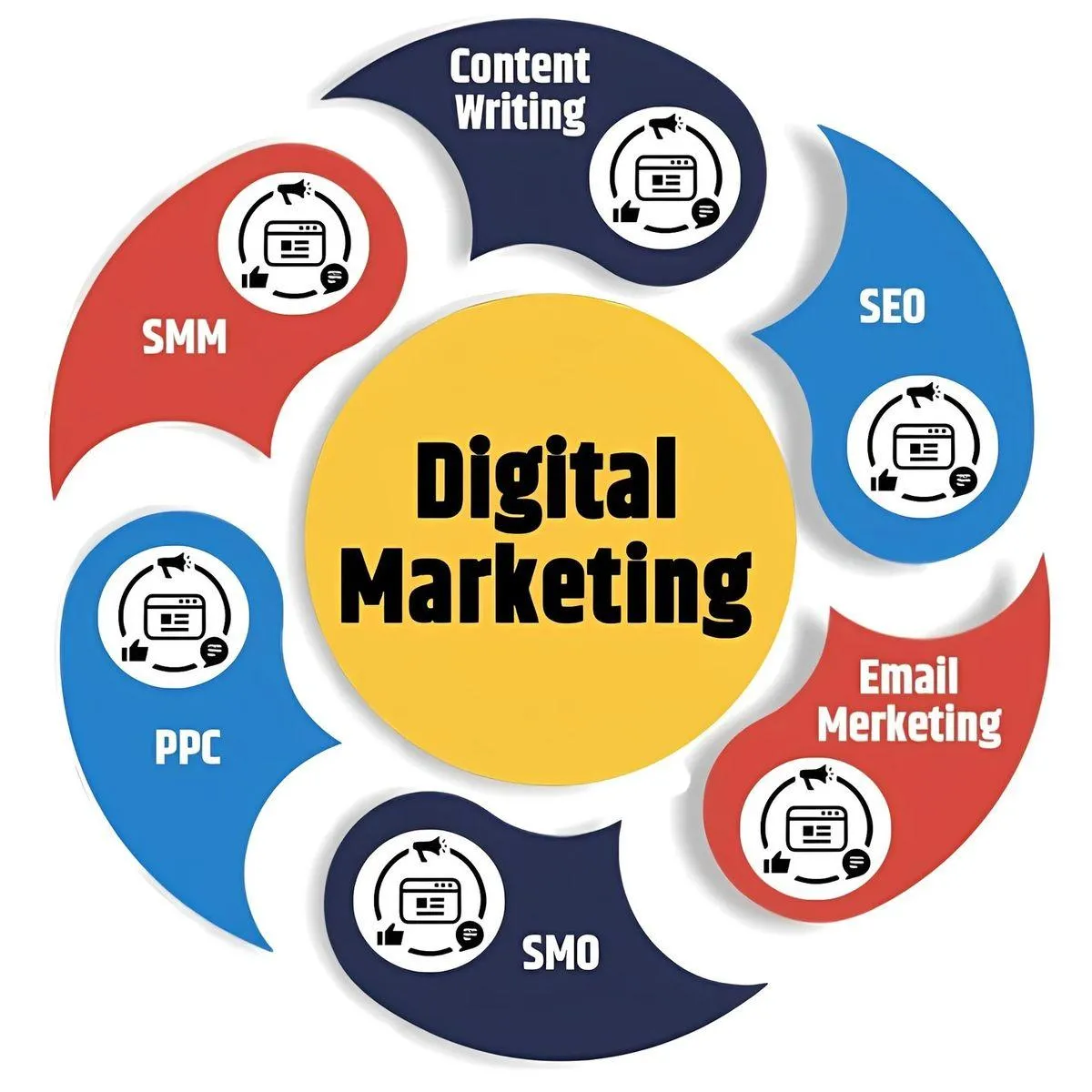
Short answer: Digital marketing services divide into ten that matter: SEO, local search, PPC, content, web design and development, email, social, automation, reputation management, and AI visibility. Each is good at something specific and useless at others. PPC buys visibility now and stops when you stop. SEO and content compound slowly. Local search returns the most per hour for any business with a service area. The buying question is not which services are best but which ones your situation actually needs.
Most service pages list what an agency sells. This one explains what each service actually involves, what it is good for, when to skip it, and how long it realistically takes.
If you are trying to work out what you need, that is more useful than another list of capabilities.
Table of Contents
How to think about services
Search engine optimization
Local search
Pay-per-click advertising
Content marketing
Web design and development
Email marketing
Social media
Marketing automation
Reputation management
AI visibility
Which services you actually need
What determines scope
How services work together
Frequently asked questions
How to Think About Services
Two questions sort almost everything.
How long can you wait? Paid channels produce results immediately and stop the moment you stop. Organic channels take months and compound. Your situation, not your preference, decides the balance.
Where do your customers actually look? Not where marketing content says they look. For most local service businesses the honest answer is Google and Google Business Profile, not social platforms.
Everything below is filtered through those two.
Search Engine Optimization
What it involves. Technical health so search engines can crawl and index the site, keyword research to find terms you can realistically win, on-page optimization of titles and headings and structure, content that answers real queries, and authority built through earned links.
What it is good for. Durable visibility that compounds. Work done this quarter keeps returning value long after it is finished, which no paid channel does.
When to skip or delay it. If you need enquiries within weeks, SEO alone will not deliver them. It also returns poorly if your site does not convert, since better rankings send more people to a page that already fails.
Realistic timeline. Three to six months for meaningful movement in a competitive market, longer for a new domain.
Covered in depth in our guide to SEO in priority order, and for smaller operations, small business SEO.
Local Search
What it involves. Google Business Profile completion and management, listing consistency across directories, genuine service area pages, and a consistent review request process.
What it is good for. Appearing in the map pack, which sits above organic results and captures a large share of local clicks. For any business with a defined service area, this is usually the highest-return work available and it is frequently the least complete.
When to skip it. Only if you have no geographic service area at all.
Realistic timeline. Business Profile improvements often show movement in two to six weeks, faster than almost anything else.
See local SEO services and SEO services near you in Toronto.
Pay-Per-Click Advertising
What it involves. Campaign structure built around specific goals, keyword and audience targeting, geographic targeting, ad copy, landing pages that match the ad, and ongoing adjustment based on performance.
What it is good for. Immediate visibility, testing which messages and terms convert before committing to organic work, and filling the gap while SEO builds.
When to skip it. When your landing pages do not convert. Paid traffic to a page that fails converts nothing, faster. Fix conversion first.
Realistic timeline. Traffic within days. Meaningful optimization takes several weeks of data.
Content Marketing
What it involves. Identifying the questions customers actually ask, then publishing thorough answers structured so both search engines and AI answer engines can use them. Guides, question pages, comparisons, and video.
What it is good for. Feeding every other channel. SEO needs content to rank, AI engines need it to cite, social needs it to share, email needs it to send. It also reaches people earlier in a decision than any other channel.
When to skip it. If you cannot sustain it. Publishing hard for six weeks then stopping is the most common pattern and the least effective. Monthly and thorough beats weekly and thin.
Realistic timeline. Three to six months before individual pieces gain traction, then compounding.
See content marketing.
Web Design and Development
What it involves. Performance against measurable thresholds, mobile-first build, accessibility conformance, a clear conversion path, and redirect mapping if you are replacing an existing site.
What it is good for. Everything else. Every channel above sends people to your site, and the site determines whether any of it converts.
The thresholds worth holding a developer to. Largest Contentful Paint under 2.5 seconds, Interaction to Next Paint under 200 milliseconds, Cumulative Layout Shift under 0.1. Measured with field data rather than lab scores.
The risk nobody mentions. A redesign that changes URLs without redirects destroys rankings you already earned. This is the most expensive avoidable mistake in web projects.
Realistic timeline. Six to twelve weeks for most business sites, with content readiness the usual bottleneck.
See website design and development, which also covers Ontario accessibility obligations.
Email Marketing
What it involves. List growth with a genuine incentive, segmentation, welcome and nurture sequences, and consistent sending.
What it is good for. Reaching people who already raised their hand. Unlike social followers or ad impressions, you own the list.
The Canadian constraint. CASL requires opt-in consent before sending commercial electronic messages, unlike the American opt-out standard, and it applies to business-to-business email. Implied consent expires. Any sequence you build needs to track that.
When to skip it. If you have no list and no realistic way to build one.
Realistic timeline. Immediate for an existing list. Months to build one worth sending to.
Social Media
What it involves. Platform selection, consistent posting, community engagement, and where relevant paid amplification.
What it is good for. Awareness, credibility signals, and community for businesses where the customer relationship is ongoing or visual.
When to skip it. More often than agencies admit. For many local service businesses, social contributes little to search visibility and consumes hours that Business Profile work needs more. Nobody chooses a plumber from Instagram.
Realistic timeline. Months of consistency before an audience means anything.
Marketing Automation
What it involves. Appointment reminders, automated lead response, review requests, intake forms, and invoicing sequences.
What it is good for. Consistency. The review request that goes out every time rather than when someone remembers, and the lead response that arrives in four minutes rather than four hours.
The Canadian constraint. Same as email. Consent capture has to be designed in before the sequences are built, not retrofitted afterwards.
Realistic timeline. Simple automations show results in four to six weeks.
See business automation.
Reputation Management
What it involves. Monitoring what appears about your business, generating genuine reviews through a compliant process, responding to feedback, and building content that outranks what cannot be removed.
What it is good for. Reviews influence both local rankings and the decision itself, particularly where customers are choosing under time pressure.
What legitimate providers will not do. Generate reviews for you, gate requests so only happy customers are asked, or guarantee removal of negative content. In Canada the first two sit within the Competition Act's deceptive marketing provisions.
Realistic timeline. Review volume builds within weeks. Changing what ranks for your business name takes months.
See online reputation management.
AI Visibility
What it involves. Structuring pages so ChatGPT, Gemini, Perplexity, and AI Overviews can extract and cite them. Direct answers at the top of sections, question-based headings, self-contained passages, concrete specifics, and schema markup.
What it is good for. Appearing in answers that increasingly replace the click. Ranking on Google and being cited by an AI engine are now separate outcomes.
When to skip it. Never, because it layers onto content you are producing anyway rather than being separate work.
Realistic timeline. Structural changes can affect citation relatively quickly, though discovery still depends on the same authority and crawlability that SEO builds.
Which Services You Actually Need
Sequence by your most pressing constraint.
Enquiries needed this month: PPC plus conversion work on the pages the ads point to.
Defined local service area: local search first, always. Nothing else returns as much per hour.
Traffic arriving but few enquiries: stop buying traffic and fix the conversion path.
Long decision cycle: content depth, since buyers research over weeks.
Growth that compounds: SEO, content, and AI structuring together over six to twelve months.
Leads arriving but handled inconsistently: automation before more acquisition.
The weighting also shifts by category. Trades and emergency services live on local search and reviews. Professional services need content depth. Restaurants lean on visual social and third-party listings. Our guide to strategic marketing plans by business type covers this in detail.
What Determines Scope
Rather than comparing invoices, compare what you are actually getting. Scope is driven by a handful of factors.
How many channels you need. A single-channel local SEO engagement is a different scope from coordinated SEO, content, paid, and social.
Your starting position. A site with technical problems, no analytics, and an incomplete Business Profile needs foundational work before anything else produces results. That is real work and it comes first.
Competitive density in your category. Legal, dental, and real estate in Toronto require sustained effort against established competitors. Specialised B2B categories require less.
How much content is involved. Content production is usually the largest ongoing component of any engagement.
Whether you need execution or strategy. Some businesses have internal capacity and need direction. Others need the work done.
Project versus retainer. Project work suits a defined deliverable with a clear endpoint: an audit, a website rebuild, a campaign launch. Retainer work suits anything that compounds, since SEO, content, and reputation all require sustained effort over months. Many businesses start with a project, then move to ongoing work once they can see what the situation requires.
How Services Work Together
The argument for coordination is real, though it is usually overstated.
What genuinely compounds: PPC keyword data tells you which terms convert before you commit months of SEO to them. Content produced for search also feeds social and email. A faster, clearer site improves conversion for every channel simultaneously. Reviews improve both local rankings and the decision.
What does not: running every service at once. Effort spread across seven channels produces weak results everywhere and clear signal nowhere. Two channels done properly beats seven done occasionally.
What to Ask Any Provider
Who owns the accounts and data if we part ways? You should own your domain, site, analytics, Business Profile, and ad accounts. Get it in writing.
What happens in the first 90 days? A real answer has a sequence. A weak one starts with deliverable counts.
Which metrics will you report on? Enquiries and revenue, not impressions and followers.
Who actually does the work? Named people and roles.
What do you need from us? An honest answer names client responsiveness.
Our guide to the questions to ask before hiring covers what strong and weak answers sound like, and the red flags of a bad agency covers the disqualifiers.
How This Looks Across Different Businesses
Service weighting depends heavily on how customers arrive.
An emergency provider like Tuber Towing needs local search coverage, reviews, and pages that load fast on a weak mobile connection. There is no consideration phase to influence, so content depth matters less than immediate visibility. Sprony faces the same pattern across the Spruce Grove and Stony Plain region.
Considered purchases invert it. Someone researching equipment from AMT Truck compares specifications across weeks, which rewards depth over speed. Operationally, platforms such as Miobi manage the workflows behind enquiries, which is where a lot of otherwise effective marketing quietly loses value.
Talk to Us About Your Situation
Noble Digital is based in downtown Toronto and works with businesses across the GTA and beyond. We start with what your situation actually needs rather than with a full service list, and we sequence rather than launching everything at once.
For how engagements actually run, phase by phase, see Noble Digital services. For the local market, see online marketing in Toronto. For building the plan yourself, see our digital marketing strategy guide.
Learn more about our team, see our services page, browse the Noble Digital blog, or contact us.
Frequently Asked Questions
What are digital marketing services?
The channels and disciplines a business uses to be found and chosen online: search engine optimization, local search, pay-per-click advertising, content marketing, web design and development, email, social media, automation, reputation management, and AI visibility. Most businesses need several, sequenced rather than launched together.
Which digital marketing service should I start with?
If you serve a defined local area, Google Business Profile and local search, which return more per hour than anything else. If you need enquiries within weeks, PPC alongside conversion work. If your site already receives traffic but few enquiries, fix conversion before buying more traffic.
How long does each service take to show results?
PPC produces traffic within days. Local search improvements often move in two to six weeks. Automation shows results in four to six weeks. SEO and content typically take three to six months for meaningful movement, then compound. Reputation work builds review volume within weeks.
Do I need all digital marketing services at once?
No, and attempting it usually produces weak results everywhere. Two channels run properly outperform seven run occasionally. Add a second channel only once the first runs without constant attention. Write down which channels you are deliberately skipping and why.
What is the difference between SEO and PPC?
SEO builds organic visibility that compounds over months and keeps working after the work stops. PPC buys visibility immediately and stops the moment you stop. They pair well: PPC data shows which terms actually convert, which tells you where SEO effort is worth spending.
Should social media be part of my digital marketing?
Not always. For many local service businesses, social contributes little to search visibility and consumes hours that Google Business Profile work needs more. It suits businesses with ongoing customer relationships or visual products. Choose based on where your customers actually spend time.
What should I ask before hiring a digital marketing provider?
Who owns the accounts and data if you part ways, what happens in the first 90 days, which metrics they report on, who actually does the work, and what they need from you. The ownership question is the one buyers most often forget and the one that causes the most damage later.
How do I know which services my business needs?
Sequence by your most pressing constraint. Immediate enquiries point to paid plus conversion work. A local service area points to local search. Traffic without enquiries points to conversion. A long decision cycle points to content. Category matters too, since weighting differs substantially by business type.
Trusted Partners
Looking for reliable towing services or digital marketing solutions? Check out these trusted partners:
Miobi: Business management and digital workflow tools. Visit Miobi
Sprony: Light and heavy duty towing across the Spruce Grove and Stony Plain region. Visit Sprony
AMT Truck: Truck and towing equipment solutions. Visit AMT Truck
Tuber Towing and Recovery: Light and heavy duty towing in Edmonton, available 24/7. Visit Tuber Towing
